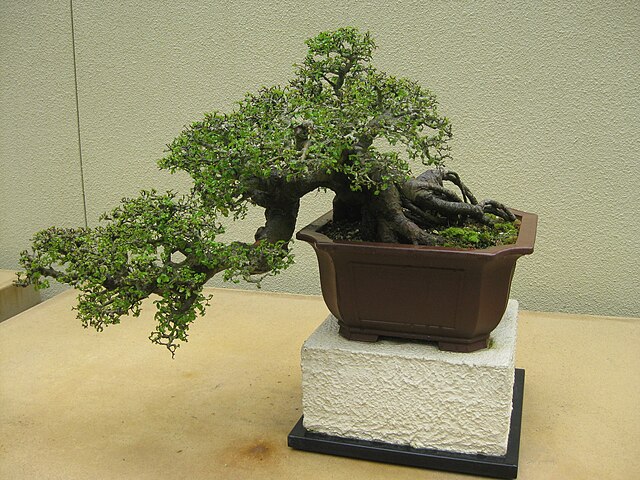
What Is the Semi-Cascade Style?
The Semi-Cascade, known in Japanese as Han-Kengai (半懸崖), is the graceful middle ground between the vertical upright styles and the dramatic full cascade. The defining rule is precise: the trunk or primary branch extends downward past the rim of the pot, but does not fall below the base of the pot.
This style captures the image of a tree growing from the side of a cliff or a riverbank — leaning out over open space, defying gravity, yet still rooted with strength. The tension between groundedness and open-air movement is what makes Han-Kengai visually compelling.
How Semi-Cascade Differs from Full Cascade
The distinction matters both aesthetically and practically. In a full Cascade (Kengai), the apex of the tree drops well below the bottom of the pot — sometimes dramatically so, requiring a tall stand or table for display. The Semi-Cascade stops at or just below the pot rim, making it more versatile for display and slightly less demanding structurally.
Both styles share the same essential drama — the sense of a tree clinging to a precipice — but the semi-cascade is more restrained, more elegant, and arguably more difficult to balance well. The exact stopping point of the cascade requires deliberate judgment.
Best Species for Semi-Cascade
Juniper
Shimpaku and procumbens junipers are excellent semi-cascade subjects. Their naturally spreading, layered branch structure translates beautifully into the cascading form, and their tolerance for heavy wiring makes it possible to achieve dramatic angles. Care note: Full sun, good drainage, water when partially dry.
Wisteria
Few bonsai make a more breathtaking semi-cascade than a flowering wisteria in full bloom. The cascading flower clusters naturally complement the downward sweep of the style. Wisteria is vigorous and forgiving, though it requires careful summer pruning to prevent excessive thickening. Care note: Full sun, generous watering during flowering season.
Pyracantha (Firethorn)
Pyracantha’s naturally arching branches and spectacular autumn berry clusters make it an ideal semi-cascade species. The berries — bright orange or red — create seasonal drama that suits the style’s expressive nature. Care note: Full to partial sun, moderate watering.
Cotoneaster
One of the most naturally cascading species, cotoneaster’s flexible branches and small leaves allow for very refined semi-cascade development. Its red berries in autumn add color and charm. Excellent for beginners attempting the style for the first time. Care note: Full to partial sun, moderate watering.
Anatomy of the Semi-Cascade
The cascade in a Han-Kengai bonsai usually begins within the lower third of the trunk — the tree rises briefly from the pot, then bends decisively downward. The most critical point is where the trunk passes over the pot’s rim: this transition should appear natural and effortless, not forced.
Secondary and tertiary branches fill out the design. Some artists include upward-reaching branches near the base to create visual counterbalance. The apex — the end of the cascading trunk — should ideally face slightly upward, as if the tree is still reaching for light despite its downward path.
Pot Selection for Semi-Cascade
Semi-cascade bonsai traditionally use tall, narrow pots — often hexagonal, round, or drum-shaped. The height of the pot becomes part of the composition: the taller the pot, the more space the cascading form has to express itself without touching the display surface.
Glazed pots in soft blues, greens, or earth tones complement the semi-cascade’s organic energy. The pot should feel grounded and stable even as the tree reaches outward.
Creating a Semi-Cascade from Nursery Stock
Select material with a naturally arching or leaning trunk. Place the tree so the potential cascade side hangs over the edge of the table during evaluation. The natural lean of the material often suggests where the cascade should go — work with the tree’s existing character, not against it.
Wire the main trunk into position early in training and allow it to set for a full growing season before adjusting. The bend at the cascade point is the most structurally stressed area of the tree — use wire gauges thick enough to hold the angle without cutting into bark, and check frequently.