What Is the Windswept Style?
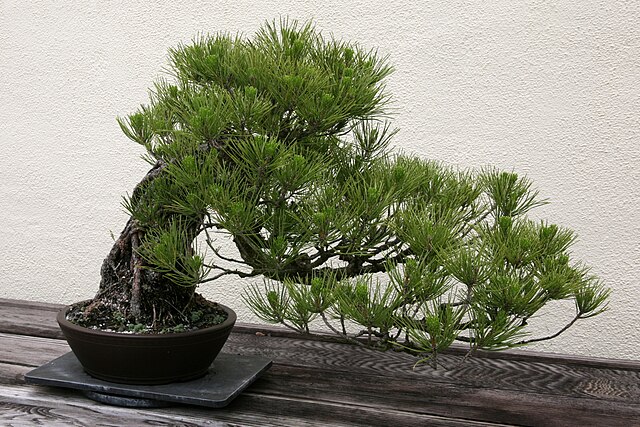
The Windswept style, known in Japanese as Fukinagashi (吹き流し) — literally “blown by wind” — depicts a tree that has been permanently shaped by the force of a prevailing wind. Every branch, and often the trunk itself, streams in the same direction, as if frozen mid-gust. It is one of the most dramatic and expressive of all bonsai styles.
The image is instantly recognizable to anyone who has seen trees along a rocky coastline, at a mountain pass, or on an exposed ridgeline. The windswept bonsai captures that specific, powerful quality of living things shaped by forces larger than themselves — and still thriving.
Key Design Elements
Directional Consistency
The defining rule of Fukinagashi is absolute: all branches must flow in the same direction. Even branches that naturally grow upward must be trained to sweep sideways or downward in the direction of the “wind.” Any branch that breaks this rule destroys the illusion. There are no exceptions.
Trunk Movement
In the most powerful windswept designs, the trunk itself leans noticeably in the direction the wind blows — usually at a 20 to 40 degree angle from vertical. This trunk lean amplifies the sense of sustained, relentless force. Some artists position the roots (nebari) to suggest the tree’s resistance: roots grip and splay dramatically on the upwind side, as if anchoring against being uprooted.
Branch Density
Windswept trees tend to have more foliage mass on the downwind side (where branches accumulate) and sparse or absent branches on the upwind side. The upwind side sometimes features jin (stripped, dead branch stubs) pointing into the “wind,” suggesting branches that did not survive the sustained force.
Best Species for Windswept
Juniper
The most popular windswept species worldwide. Shimpaku juniper wire easily, hold dramatic angles well, and develop the pale, textured bark and sinuous trunk movement that makes windswept designs so compelling. Their naturally layered branch pads translate directly into wind-swept foliage clouds. Care note: Full sun, excellent drainage, check wire every 4-6 weeks during growing season.
Japanese Black Pine
Black pine windswept designs are among the most dramatic in bonsai. The dark, fissured bark, the stiff dark-green needles, and the tree’s overall sense of strength and endurance make it the perfect windswept subject for more advanced practitioners. Care note: Full sun, precise summer candle work required.
Larch (Karamatsu)
Deciduous and seasonal, larch creates windswept designs that change dramatically through the year. The delicate spring needles emerging from wind-angled branches create a particularly moving image. In winter, the bare skeleton reveals the full windswept architecture. Care note: Full sun, generous watering during growing season, dormancy required in winter.
Chinese Elm
For beginners attempting windswept for the first time, Chinese elm is the forgiving choice. It wires easily, recovers quickly from aggressive positioning, and produces the fine, twiggy branching that creates convincing windswept foliage masses. Care note: Full to partial sun, moderate watering, indoor-capable in warm climates.
How to Create a Windswept Design
Begin with material that already has some natural lean or movement in the desired wind direction — this makes the design more convincing and reduces the structural stress on the tree. A slightly curving trunk that already leans five or ten degrees is worth more than a straight trunk in windswept development.
Wire the trunk first to establish or deepen the lean if needed. Use thick wire anchored at the root base for leverage. Then wire every branch — without exception — sweeping in the wind direction. Begin at the primary branches and work progressively to smaller secondaries.
Check your work by standing back and viewing the tree from the front with squinted eyes. If any branch breaks the directional sweep, re-wire it or remove it. The illusion only works when it is complete and uncompromised.
Pot Selection for Windswept
Flat, oval pots in earthy browns, grays, or unglazed finishes suit the windswept style. The low horizontal profile of the pot amplifies the sense of exposed terrain — rock, cliff, or open ground. Avoid tall pots or highly decorative glazing that would compete with the tree’s powerful movement. The pot should feel like earth, not ornament.